

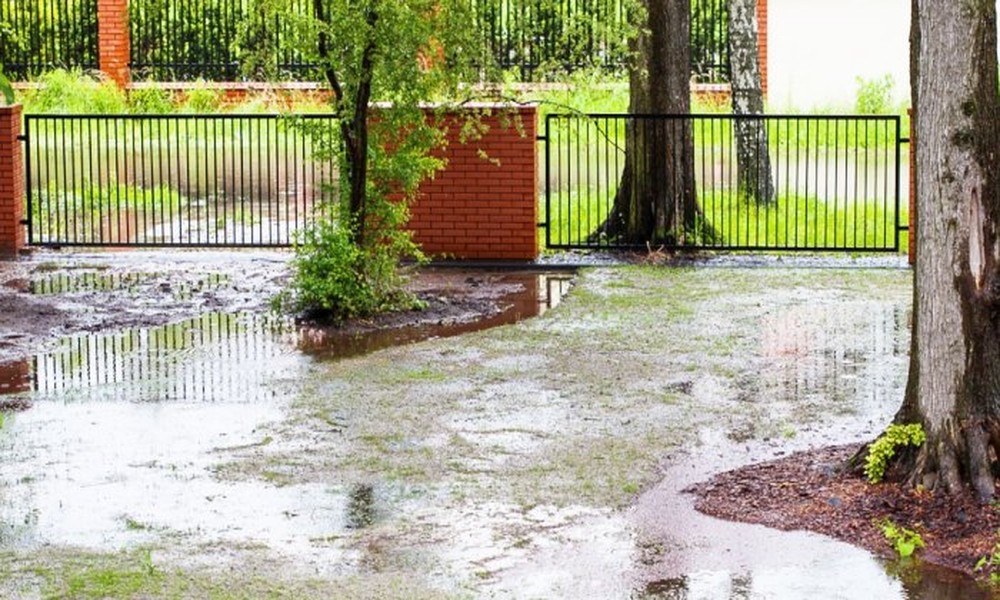
Most homeowners blame lawns, patios, or blocked drains when their garden stays wet. Fencing rarely gets mentioned. Yet after decades working across York, I can say with confidence that many long-term drainage problems begin right at the boundary. I see it on inspections all the time. People search for fencing companies near me because posts are rotting or panels are leaning, but the real issue often sits in the soil along the fence line. Many homeowners first look at York Fencing because they want to understand why the same damp problems keep returning, even after repairs.
Drainage issues at boundaries develop quietly. They rarely flood dramatically. Instead, they soften soil, weaken posts, and slowly damage fencing until failure feels inevitable.
Why fence lines change how water behaves
Fence lines interrupt natural water flow. Digging post holes, pouring concrete, and altering ground levels all affect how rain moves through soil.
In York, clay soil dominates many gardens. Clay drains slowly. When a fence is installed without considering this, water often collects where posts meet the ground.
From years on site, I have learned to spot drainage issues by feel. Soil near fence lines stays soft longer. Footprints linger. Moss forms. Grass thins. These signs usually appear long before a fence fails.
How post holes quietly create drainage problems
Every post hole changes soil structure. Clay compacts easily when wet. Once compacted, it drains poorly.
If a post hole is backfilled without care, the soil around it becomes denser than the surrounding ground. Water follows the path of least resistance and settles there.
I often remove posts to find soil that feels almost sealed, holding moisture against the timber. Over time, this leads to rot at ground level.
Concrete and its unintended side effects
Concrete is essential for stability, but it alters drainage. A solid plug of concrete can act like a bowl if installed poorly.
Water runs down the post and sits on top of the concrete. Without drainage beneath, it has nowhere to go.
On good installations, I usually allow for drainage at the base of the hole. Gravel beneath the concrete lets water escape downward rather than pooling around timber.
Older fences rarely include this detail.
Why gravel boards affect more than appearance
Gravel boards are designed to protect panels from ground contact, but they also influence drainage.
When gravel boards sit too low or ground levels rise against them, water collects along the fence base. This keeps soil saturated and accelerates post decay.
Correct height matters. Gravel boards should protect timber without trapping water against the fence line.
Shade and airflow at boundaries
Fence lines often receive less sunlight and airflow than the rest of the garden. Tall panels block wind and cast shade.
This slows evaporation. Soil stays damp longer after rain. In clay, that means prolonged softness.
Homeowners notice this when one strip of the garden never quite dries, even in summer.
Why posts fail faster in poorly drained ground
Posts rely on firm soil to resist movement. Waterlogged ground offers little support.
I usually install posts at around 600mm to 750mm depth to reach more stable ground, but even deep posts struggle if water cannot drain.
Repeated wetting weakens soil structure. Posts loosen. Fixings strain. Panels shift.
The fence does not collapse overnight. It degrades steadily.
How drainage problems spread along the fence line
Drainage issues rarely stay local. Once water collects along one section, it often spreads.
Soil erosion exposes concrete. Adjacent posts become affected. Rails begin to sag as alignment changes.
This is why homeowners often see multiple posts failing within a short period.
Why repairs rarely solve drainage-led failures
Repairs focus on symptoms. A leaning post is reset. A rotten post is replaced.
If drainage is not improved, the same conditions remain. Water continues to collect. Soil stays weak.
Homeowners searching for fence repair near me often face repeat problems because the underlying drainage issue has not been addressed.
When repairs still make sense
Repairs can work if drainage problems are minor and localised. Improving ground levels. Adding drainage gravel. Adjusting gravel boards.
Knowing when repairs will hold is key. Many homeowners review fence repairs guidance to understand whether repairs will genuinely extend lifespan or simply delay replacement.
If multiple posts show signs of rot or movement, replacement with improved ground preparation usually makes more sense.
How fencing design influences drainage
Design choices affect drainage. Solid gravel boards and continuous panels trap moisture.
Designs that allow airflow help soil dry faster. Hit and miss fencing, slatted sections, and stepped heights reduce damp build-up along boundaries.
These choices support both fence longevity and healthier soil.
Composite fencing does not remove drainage concerns
Composite fencing does not rot, but it still relies on posts set in soil.
Composite fencing cost often reflects durability above ground, but drainage remains critical below ground. Poor drainage still leads to movement and alignment issues.
Even low maintenance materials need stable, well-drained foundations.
Why garden slope matters at fence lines
Slope plays a big role. Fence lines at the bottom of a slope collect runoff from higher ground.
Without proper planning, water pools along the boundary. Soil becomes saturated. Posts suffer.
During replacement, small changes to ground levels can redirect water away from fences and solve long-standing problems.
How fence lines affect surrounding planting
Poor drainage near fences affects planting too. Roots struggle in compacted, wet soil. Plants thin or fail.
Homeowners often replace plants repeatedly without realising the fence line is the cause.
Improving drainage benefits both fencing and planting health.
Why older fences often create long-term drainage damage
Older fencing installations often ignored drainage entirely. Posts were set shallow. Concrete filled holes completely. Ground was left uneven.
Over decades, this created persistent damp zones along boundaries.
Replacing fencing without addressing these issues simply resets the clock.
How planned replacement fixes drainage problems properly
Replacement allows drainage issues to be corrected properly. Post holes can be prepared correctly. Gravel added. Ground levels adjusted.
Homeowners often notice gardens drying more evenly after replacement, even in wet weather.
This improvement often surprises people, but it makes sense once the boundary is no longer trapping water.
The link between drainage and fence lifespan
Drainage and lifespan are directly connected. Drier soil supports posts. Reduced moisture slows rot. Alignment holds longer.
Fences that sit in well-drained ground last significantly longer than those surrounded by damp soil.
This is one of the most overlooked factors in fence longevity.
Why homeowners are noticing drainage issues sooner
More time spent at home means people notice their gardens more. Remote work has sharpened awareness of damp areas and slow-drying ground.
Homeowners now spot drainage problems earlier and act before fences fail completely.
This awareness is driving better decisions.
What to look for if your fence line stays wet
There are a few simple checks homeowners can make.
- Does soil near the fence stay soft longer than elsewhere?
- Is moss forming at the base of panels?
- Do posts feel loose when pushed gently?
- Are gravel boards sitting below ground level?
- Does water pool after rain?
These signs point to drainage issues rather than simple wear.
Why drainage should be part of every fencing conversation
Drainage affects fence stability, lifespan, and garden health. Ignoring it leads to repeated problems.
Homeowners exploring garden fencing increasingly ask about drainage because they have seen what happens when it is overlooked.
How understanding drainage changes fencing outcomes
Once drainage is addressed, fences perform better. Posts stay firm. Panels remain aligned. Maintenance drops.
From decades working across York, it is clear that many garden drainage problems begin at the fence line. Homeowners who recognise this early and address drainage during installation or replacement end up with fences that last longer and gardens that recover faster after rain. The boundary stops fighting the land and starts working with it.


Comments are closed.