
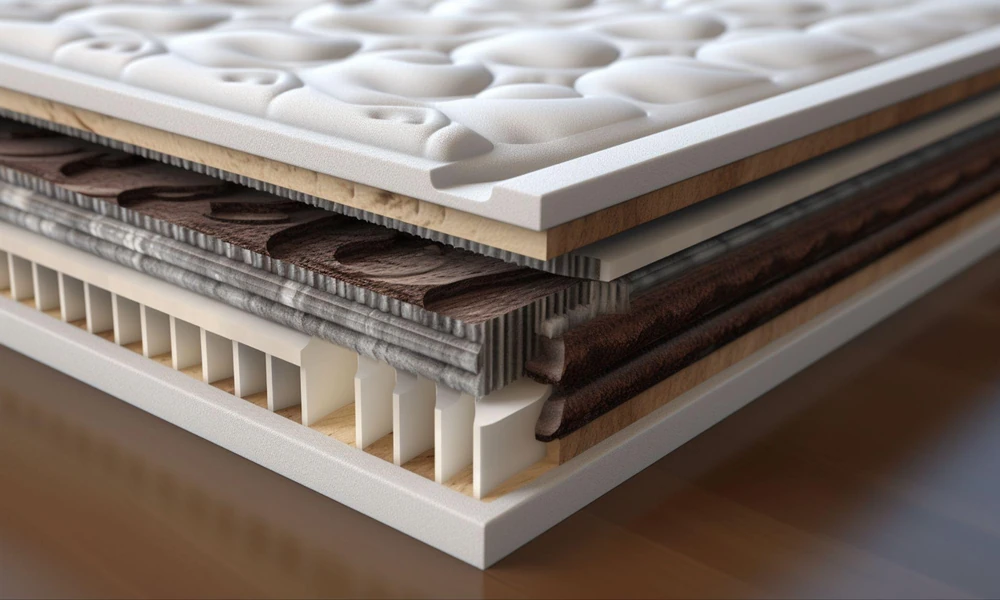
Mattress spec sheets have a habit of listing terms that sound impressive without explaining what they actually mean for how the mattress feels or performs. Pocket springs, latex density, layer counts, these terms get thrown around in marketing copy often enough that shoppers absorb a rough impression of what they mean without ever having it properly explained. That gap between impression and reality causes more mismatched mattress purchases than any lack of research effort on the buyer’s part.
1. “More Pocket Springs Always Means Better Support”
A higher spring count sounds like an obvious upgrade, but spring count alone doesn’t determine support quality without considering spring gauge, zoning, and how springs are arranged across different areas of the mattress. Luxury mattresses with fewer, well-engineered zoned springs can outperform one with a higher raw count but no differentiated support across the shoulders, lumbar area, and legs.
2. “Latex and Memory Foam Provide the Same Kind of Support”
These two materials behave quite differently under body weight. Memory foam contours slowly and retains an impression briefly after pressure is removed, while latex responds more quickly and springs back to shape almost immediately. Buyers assuming these terms are interchangeable descriptions of “foam” often end up surprised by how differently the two actually feel once lying on them.
3. “Firmer Always Means More Supportive”
Firmness and support are related but distinct properties. A mattress can feel firm to the touch while still failing to properly support spinal alignment if its internal structure doesn’t respond correctly to different body weights and pressure points. Genuine support depends on how well a mattress keeps the spine in a neutral position throughout the night, not simply how much resistance it offers when pressed.
4. “Natural Latex Is Always Better Than Synthetic Latex”
Natural latex has genuine advantages in durability and breathability, but synthetic or blended latex isn’t automatically inferior in every luxury mattress, and some blends are specifically engineered to balance cost, performance, and specific firmness characteristics that pure natural latex doesn’t always achieve as precisely. The right choice depends on what specific qualities a buyer is prioritising rather than assuming “natural” universally outperforms every alternative.
5. “Higher Pocket Spring Count Means a Noisier Mattress”
Some buyers assume more springs mean more potential for squeaking or noise over time, but individually wrapped pocket springs are specifically designed to move independently and reduce the kind of noise transfer associated with older, interconnected coil systems. A well-constructed pocket spring mattress from a reputable furniture in Singapore retailer is typically quieter over years of use than older coil-based designs, not noisier.
6. “A Thicker Mattress Automatically Means Better Quality”
Overall mattress thickness is often used as a shorthand for quality in marketing materials, but thickness alone says little about the quality of individual layers or how they work together. A thinner mattress with well-engineered layering can outperform a thicker one padded largely with lower-quality filler material between the surface and the support core.
7. “All Luxury Mattresses Use the Same Basic Construction With Minor Differences”
Buyers sometimes assume that once they’ve understood one luxury mattress’s construction, they’ve essentially understood them all, with differences limited mainly to marketing and price. In reality, layer arrangement, zoning technique, and the specific combination of materials used vary considerably between manufacturers, meaning genuinely different sleep experiences exist across mattresses that might appear similar on a spec sheet at first glance.
Quick Facts Worth Remembering
- Spring count alone doesn’t determine support quality without considering zoning and gauge
- Latex and memory foam respond to pressure very differently despite both being called “foam”
- Firmness and spinal support are related but not the same property
- Individually wrapped pocket springs are generally quieter than older interconnected coil systems
Reading Past the Spec Sheet
Understanding these seven points doesn’t require becoming a mattress construction expert, but it does help shoppers ask more useful questions when comparing options rather than defaulting to whichever spec sheet lists the most impressive-sounding numbers. When exploring luxury mattresses in Singapore, testing a mattress in person and asking directly how its specific springs and materials are arranged tends to reveal far more than the terminology on a printed label ever will.
Contact Casa Concetto to explore our range of luxury mattresses and get a clearer explanation of how each one’s construction actually supports your sleep.

Comments are closed.