
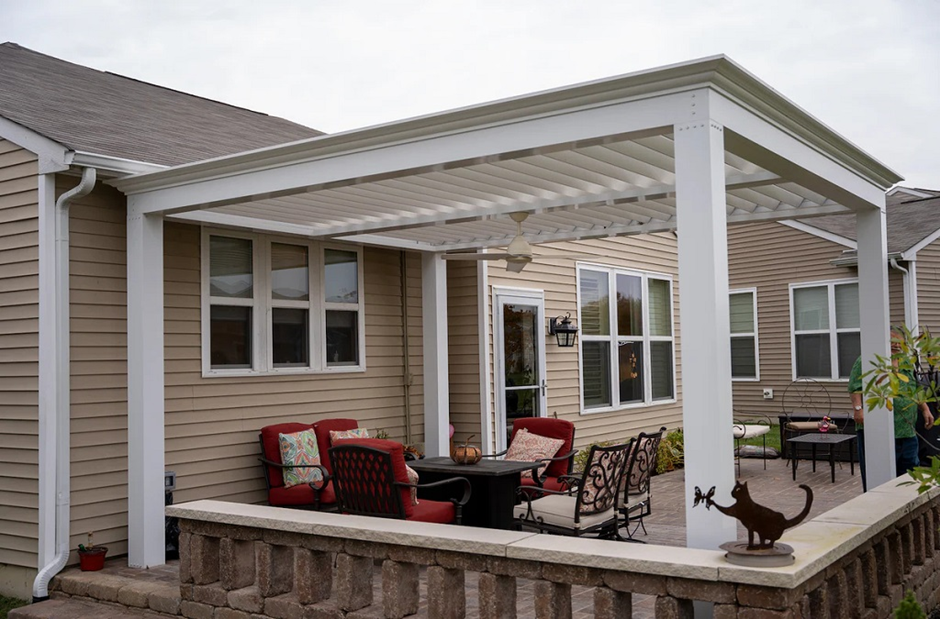
Among the most popular modern choices are louvered pergolas, which feature slatted roofs that can be adjusted to control sunlight, shade, airflow, and even rain protection.
When selecting a louvered pergola, one key decision is whether to choose a manual or motorized model.
Each has distinct advantages, and your choice ultimately depends on how you use your outdoor area, your budget, and your expectations for convenience and technology.
Manual Louvered Pergolas: Simple and Affordable
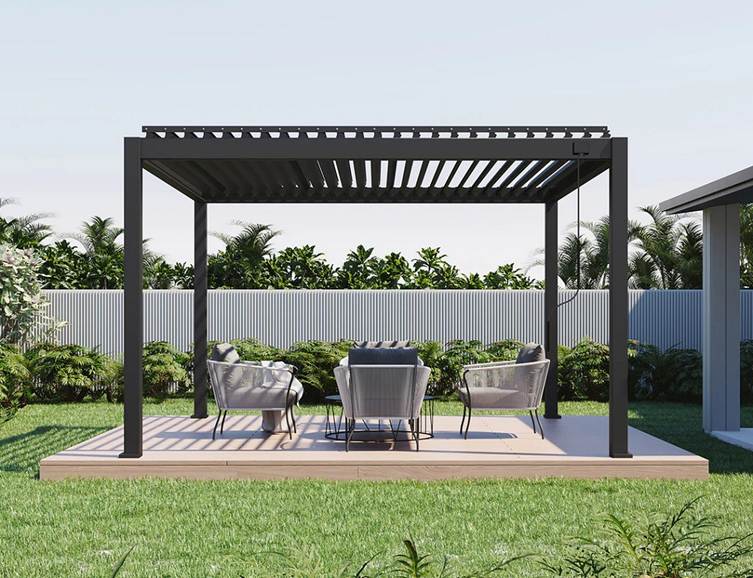
Manual louvered pergolas use a hand crank, lever, or simple pulley system to adjust the position of the louvers. Here’s why many homeowners still choose this traditional option:
Pros of Manual Pergolas
- Lower Cost: Manual systems are typically more affordable than motorized versions because they lack electrical components and motors.
- Reliable and Low Maintenance: Manual pergolas, having fewer components that can wear out, are typically easier and more affordable to maintain over the long term.
- Easy Installation: Without the need for electrical wiring or automation systems, manual pergolas can be quicker and simpler to install.
- Eco-Friendly: No electricity is required, making this a greener choice.
Cons of Manual Pergolas
- Physical Effort Required: Adjusting louvers manually can be inconvenient, especially if the pergola is large or if the mechanism is hard to reach.
- Less Convenient: Frequent adjustments throughout the day can become tedious.
- Limited Integration: Manual pergolas typically cannot be integrated with smart home systems or automated weather sensors.
Manual pergolas are ideal for homeowners who value simplicity, affordability, and durability, and who don’t mind a bit of manual effort to enjoy their outdoor space.
Motorized Louvered Pergolas: High-Tech Convenience
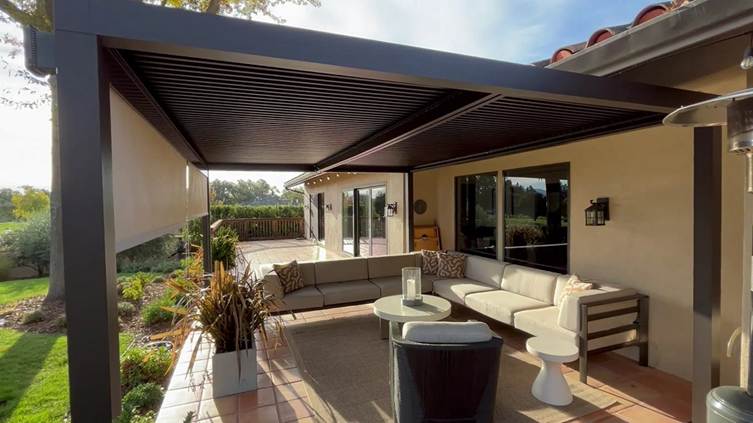
Motorized louvered pergolas use an electric motor and often come with wireless remotes, wall switches, or smartphone apps for control. Some high-end models can connect to home automation systems and feature weather sensors that automatically adjust the louvers according to sunlight, rain, or wind.
Pros of Motorized Pergolas
- Ultimate Convenience: Open, close, or adjust your pergola with the push of a button-perfect on hot sunny days or during sudden showers.
- Smart Integration: Many systems sync with smart home platforms like Alexa, Google Home, or dedicated apps for personalized automation.
- Weather Sensors: Optional sensors can protect your pergola and outdoor furnishings by automatically adjusting the louvers in changing weather conditions.
- Enhanced User Experience: Great for those with limited mobility or for families who prefer tech-enabled features.
Cons of Motorized Pergolas
- Higher Initial Cost: Motorized models cost more due to the electronics, motors, and optional smart features.
- Complex Installation: Electrical wiring is required, and professional installation is often recommended, adding to upfront costs.
- Maintenance and Repairs: Motors and control systems may require occasional maintenance or repairs, especially after heavy use or exposure to weather.
Motorized pergolas shine in homes where convenience, automation, and high-tech functionality are priorities.
Which One Is Right for Your Home?
Choosing between a manual and a motorized pergola comes down to budget, lifestyle, and how you plan to use your outdoor space.
- Choose Manual If:
- You want an affordable, low-maintenance pergola.
- You enjoy a simple, no-frills outdoor structure.
- You don’t mind manually adjusting the louvers.
- Your pergola is located in a compact area where frequent louver adjustments aren’t necessary.
- Choose Motorized If:
- You want effortless control and high convenience.
- You enjoy smart home features and automation.
- You plan to use the pergola frequently or entertain guests often.
- You want weather-responsive adjustments without lifting a finger.

Comments are closed.