

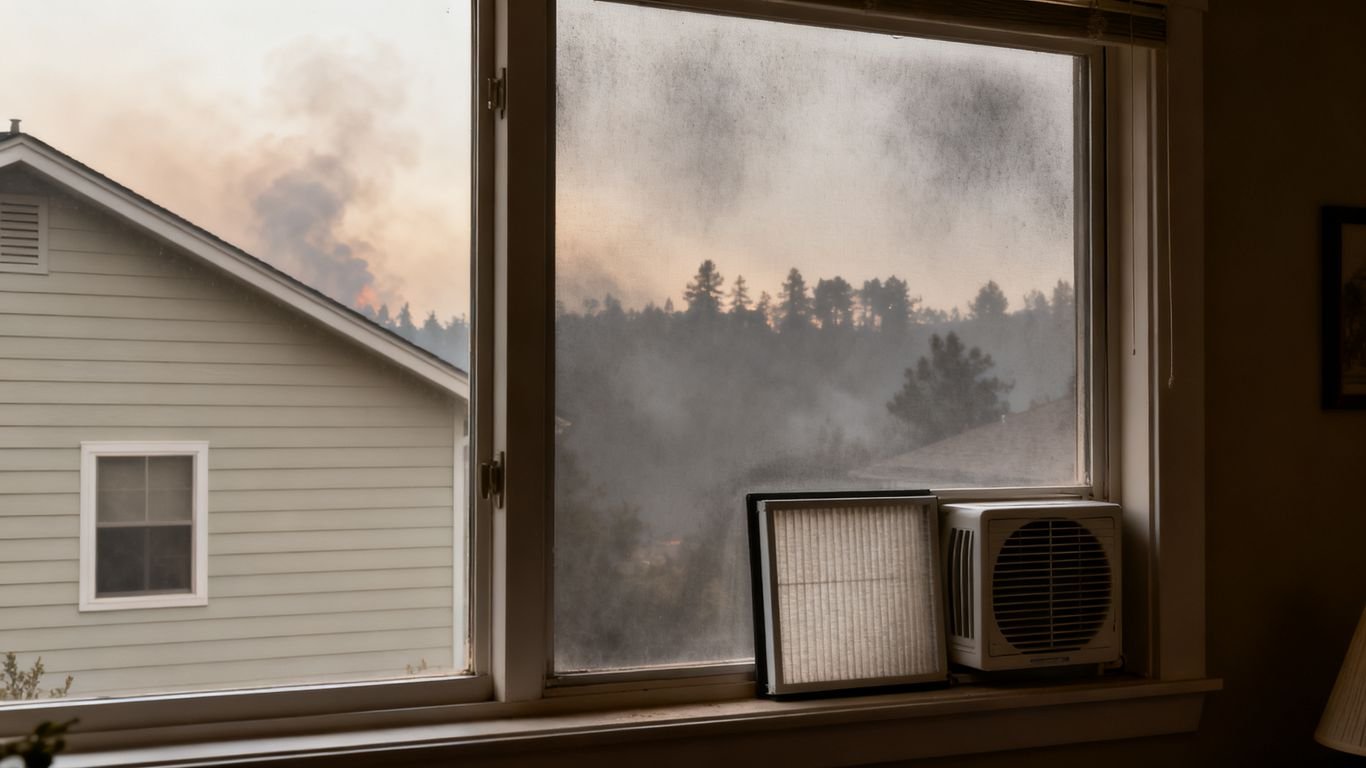
Wildfire smoke can affect a home even when flames are nowhere nearby. The amount that gets inside depends on the building, the weather, and how long smoke hangs in the area. Once indoors, particles and gases may settle on surfaces or circulate through rooms and ventilation equipment.
Fine particles, gases, and residue in smoke
Smoke is a changing mixture of fine particles and gases, with residue left behind as airborne material settles. Some particles are small enough to travel with air currents and reach indoor spaces; the quantity and composition vary with the fire and surrounding conditions. For occupants, smoke is also a health concern, and MDHHS provides wildfire smoke health guidance on reducing exposure.
Common pathways through which smoke gets indoors
Smoke can enter through ordinary openings and gaps, not only through a window left open. Its path may be difficult to notice while the event is underway, especially when the home appears closed up. Common routes include:
- Open windows and exterior doors, including brief entries and exits.
- Gaps around window frames, doors, and other building joints.
- Outdoor-air intakes or other openings connected to ventilation equipment.
- Leaks around utility lines, vents, or penetrations through exterior walls.
These routes do not affect every home equally, and one pathway may matter more during a particular smoke event. Sealing obvious gaps can help limit air leakage, but it does not remove smoke that has already entered or settle the question of indoor air quality.
Weather and building conditions that affect smoke intrusion
Wind can push smoke toward openings and create pressure differences around a building. Indoor-outdoor temperature differences, the condition of weatherstripping, and the operation of exhaust fans or ventilation systems may also influence how air moves. A home’s age alone does not determine its exposure: maintenance, construction details, and the timing of doors or windows being open can all play a part.
How smoke damages a home’s exterior
A home’s exterior is directly exposed to smoke-laden air, so deposits may form even when the building remains closed. The amount left behind depends on exposure, surface type, and whether rain or wind has moved material away. A faint film may be easy to overlook, while more noticeable deposits can change the appearance of finishes and outdoor objects.
Soot and residue on siding, windows, and doors
Soot and other particles can settle on siding, window glass, frames, and exterior doors. They may appear as a dark film or uneven smudges, particularly around sheltered edges and trim. The visible deposit is only one clue; a surface may also retain odor after the particles are no longer easy to see.
Discoloration and wear on paint and other finishes
Smoke residue can make light-colored paint look dull or stained, and cleaning attempts may affect delicate or aging finishes. The result varies with the material and the length of exposure, so a mark should not automatically be treated as permanent damage. Testing a small, inconspicuous area with a gentle cleaning method can help reveal whether the finish tolerates it.
Smoke deposits on roofs, decks, and outdoor equipment
Roofing, decks, railings, patio furniture, and equipment can collect smoke deposits, especially on surfaces sheltered from rainfall. Outdoor fabrics and porous materials may hold odor more readily than smooth, washable surfaces. A careful look around roof edges, gutters, and outdoor fixtures can help identify areas that need attention without assuming every deposit requires replacement.
How smoke affects indoor surfaces and belongings
What happens indoors depends on how much smoke entered and where it traveled. Smooth surfaces may show a removable film, while fabrics and other absorbent materials can retain odor after visible residue is cleaned away. Visible residue is not the whole story: odors, discoloration, or a change in how an item feels may also indicate exposure.
Residue on walls, ceilings, and hard surfaces
Smoke particles can settle on walls, ceilings, counters, floors, and other hard surfaces. Deposits may be more apparent near openings or in areas where air circulation carries particles, though residue can be subtle and uneven. Cleaning should be matched to the surface; too much moisture or an abrasive product can damage paint, coatings, or finishes.
Smoke absorption by carpets, furniture, and other porous materials
Carpets, upholstery, mattresses, curtains, and unfinished wood can absorb smoke compounds and hold odors. The depth of the material and the degree of exposure affect how difficult it is to clean. A surface treatment may improve an item’s condition, but persistent odor can indicate that material deeper within it still needs attention.
Damage to electronics, clothing, and stored items
Fine residue may collect on electronics and around vents or openings, where careless wiping can push particles farther into a device. Clothing, linens, books, and items stored in open containers can also acquire smoke odor. Before cleaning or discarding belongings, it can help to sort items by material and condition; delicate or valuable possessions may need specialized care.
How smoke affects heating, ventilation, and air conditioning
Heating, ventilation, and air conditioning equipment can interact with smoke that has entered the home or been drawn in from outdoors. Filters may collect particles, while other parts of a system can be exposed depending on its design and operation. Smoke-related changes do not necessarily mean equipment has failed, but a filter or odor change can be a reason to look more closely.
Smoke particles trapped in HVAC filters
A filter may capture some airborne particles as air passes through it, and visible darkening can occur after heavy smoke exposure. A filter’s appearance alone cannot measure indoor air quality or show whether the system is clean. The filter type, system design, and operating conditions all affect what it catches.
Residue and odors inside ducts and air handlers
If smoke-laden air moves through a system, residue or odor may be present in components such as ducts or the air handler. A lingering smell when the system runs can be a useful observation, but odor by itself does not establish where residue is located or whether cleaning is needed. Inspection can help distinguish a filter issue from a concern involving other components.
When to replace filters or arrange a system inspection
Filter replacement should follow the equipment and filter manufacturer’s directions, including any limits on filter type or fit. A homeowner can check the filter for visible loading and confirm that it is seated correctly, without assuming that a denser filter is suitable for every system. If odors persist, airflow changes, or visible residue appears in accessible components, an HVAC professional can assess whether inspection or service is appropriate.
Why wildfire smoke damage can linger
Smoke exposure may leave effects that are not resolved by one quick cleaning. Particles can settle in less visible places, and odor may remain in materials that absorb and release it over time. The persistence of a problem depends on the exposure and the surfaces involved, so a measured assessment is often more useful than repeated, broad cleaning.
Odors embedded in porous materials
Soft furnishings, carpets, and other porous materials can retain smoke odor after the air has cleared. Odors may become noticeable again as rooms warm up or air moves through the material. If a smell returns after surface cleaning, the source may be within the material rather than on its exposed face.
Hidden residue in cavities and behind fixtures
Residue can collect in places that are not routinely visible, including recesses, cabinet interiors, and areas behind or beneath fixtures. These locations may be missed during a quick visual check, but that does not mean every hidden space has been affected. If odors or deposits persist without an obvious source, a qualified inspection can help determine whether further investigation is warranted.
Cleaning methods that can spread residue or worsen damage
Dry brushing, vigorous wiping, or using an unsuitable cleaner can spread particles or mark a surface. Water can also cause problems on materials that should not be saturated, and strong fragrances may mask rather than remove an odor. Before cleaning a larger area, identify the material and test an appropriate method in a discreet spot; stop if the finish changes or residue smears.
How to assess and address wildfire smoke damage
A careful assessment begins with observations, not assumptions about how much damage must be present. The building’s exterior, rooms, belongings, and HVAC equipment can be checked separately, since each may show different signs. A written record of conditions and actions taken also makes it easier to explain what was found and when.
Signs that indicate smoke has reached the home
Possible signs include a persistent smoke odor, a film on indoor surfaces, soot near openings, or a filter that has collected unusual visible residue. No single sign confirms the extent of exposure, and an odor can persist even where deposits are hard to see. Comparing rooms and noting where signs are strongest can help narrow down likely entry routes or affected materials.
When professional inspection or testing may be appropriate
Professional help may be useful when odors continue after reasonable cleaning, residue appears in inaccessible areas, or HVAC concerns remain unresolved. Testing is not automatically necessary in every home; its value depends on the question being asked and whether the results would guide a decision. When choosing an inspector or restoration professional, it is reasonable to ask what the assessment covers and what the findings can and cannot establish.
Cleaning, restoration, and documenting damage for insurance claims
Start by photographing visible conditions and making a dated list of affected rooms, surfaces, and belongings before cleaning or disposal. Keep receipts and notes about filter changes, professional visits, and cleaning steps, and check the policy or contact the insurer about documentation requirements. Cleaning can then be planned according to the material and the extent of residue; items or areas that remain odorous or visibly affected may warrant assessment by a restoration professional.


Comments are closed.