
Somewhere in your mattress right now, roughly a million microscopic creatures are feasting on your dead skin cells and having the time of their tiny lives. Charming, isn’t it?
If someone in your home is sneezing indoors constantly, waking up congested, or rubbing itchy eyes with no obvious cause, dust mites are almost certainly the culprits.
Luckily, you don’t need harsh chemicals or a full home renovation to deal with them. You just need a sensible plan and a little consistency. Let’s get into it.
Know Where They’re Hiding
Before you start blasting everything with spray bottles, it helps to know what you’re dealing with.
Dust mites are drawn to places with warmth, soft fabrics, and a bit of moisture, which is, unfortunately, most of your home.
Mattresses, pillows, duvets, and upholstered furniture are their favourite haunts. Carpets and rugs come in a close second, particularly in bedrooms.
To put it in perspective: a single gram of household dust can harbour around a thousand mites. It isn’t even the mites themselves that cause the trouble; it’s their waste particles, which become airborne and trigger allergies, asthma, and eczema.
Once you know where they’re most likely to be hiding, you can focus your efforts properly instead of cleaning every corner and wondering why nothing seems to improve.
Strip and Wash Your Bedding
This is ground zero, so start here. Strip the sheets, pillowcases, duvet covers, and blankets off your bed, then wash them at a minimum of 60°C. Anything cooler, and you’ll essentially be giving the mites a warm bath instead of killing them.
Try to do this every one to two weeks. Most duvets and pillows are machine washable, but if yours aren’t, dry cleaners across the UK can handle them without any fuss.
Once you’re done, dry everything well. A tumble dryer on a high setting works brilliantly, or hang things outside on a sunny day if the weather plays along. Damp bedding is an open invitation for mites to move straight back in, so don’t skip this step.
Cover Your Mattress and Pillows
Washing your bedding is easy enough, but the mattress and pillows underneath are a different story. You can’t exactly toss them into the washing machine every week. That’s where allergen-proof covers make a real difference.
These zip-up barriers sit between your bedding and the mattress or pillow, physically blocking mites from settling into the layers underneath. They’re widely available online and in most UK homeware shops, and they’re really worth every penny.
Once they’re on, wash the covers every month or two, so allergens don’t build up on the surface.
Vacuum the Right Way
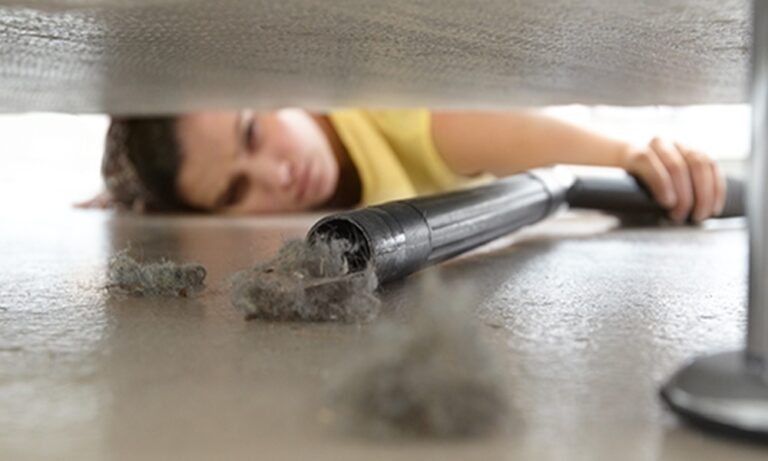
Hoovering alone can’t eliminate dust mites, but it removes the debris they feed on and clears out the airborne waste particles that trigger reactions. The catch is that not all vacuums are up to the job.
Standard vacuums can actually push allergens back into the air rather than capturing them. So, you’ll need one fitted with a HEPA filter.
Focus on mattresses, upholstered furniture, carpets, and rugs. Pay attention to the edges and corners where dust likes to gather and try to vacuum these surfaces at least twice a week or more if you have pets.
Finally, empty the vacuum bin or change the bag regularly. A packed vacuum loses suction quickly, and the whole point here is to remove dust from your home, not store it in an overworked machine that’s wheezing like it just ran a marathon.
Get Humidity Under Control
Here’s something most people don’t realise: dust mites don’t drink water. They pull moisture straight from the air around them. That means the drier your home is, the harder it’ll be for them to survive.
Aim to keep your indoor humidity below 50%. A small hygrometer can tell you where you stand, and a dehumidifier is the easiest way to bring levels down if they’re creeping up, especially in bedrooms and living rooms.
As for bathrooms and kitchens, use extractor fans and open the windows often to clear steam before it settles. And when it comes to small spaces like wardrobes, you can keep the air dry with moisture absorbers or silica gel sachets.
Declutter to Remove Dust Traps
You might not think clutter has much to do with dust mites, but the more objects you have lying around, the more places dust has to settle.
Look around your bedroom or living room for a second. Stacks of books, folded throws, and crowded shelves all catch dust surprisingly fast.
Clear a bit of space, and you’ll remove a lot of those landing spots. As a bonus, when surfaces aren’t packed with things, you can wipe, vacuum, and move through the room without constantly shifting piles around.
Also, try to store smaller items in lidded boxes where you can. But if you prefer open shelves, just give them a quick wipe every so often so dust doesn’t build up.
Running short on time? Some people find it helpful to bring in domestic cleaning companies for a regular top-to-bottom clean. This can help you keep allergen levels low without much effort on your part.
Use Natural Repellents
After you’ve cleaned and dried things out, you can use natural repellents to make the place even less comfortable for dust mites.
Certain essential oils, like eucalyptus, clove, and tea tree, are known to repel dust mites and are easy to work into your cleaning schedule.
To make a basic spray, add about 20 drops of essential oil to 200 ml of water in a spray bottle. Lightly mist mattresses, pillows, and upholstered furniture, then let everything dry completely before using them again.
You’ll get a clean, fresh smell without bringing stronger chemicals into your bedroom.
Just keep your routine consistent. A light spritz once a week tends to work much better than a heavy spray every few months.
Conclusion
None of this needs to be done in a single afternoon, so don’t let the list overwhelm you. Start small, stay consistent, and enjoy the satisfaction of breathing easier in your own home. The mites won’t know what hit them.